
Summary
- A romance scam preys on people who might feel lonely or unsuccessful at finding love. Victims of romance scams can come from every income level, educational background, gender, age, sexual identity and ethnicity.
- Some different variations of romance scams include: 1) money is needed for a family emergency, 2) a military or government employee is stuck overseas, 3) an opportunity to earn money by receiving and transferring funds and 4) the opportunity to earn money through investing in cryptocurrency.
- Fortunately, the Identity Theft Resource Center (ITRC) saw a 32 percent decrease in romance scam cases reported to its contact center in 2025 compared to 2024. Additionally, romance scams accounted for only three (3) percent of scam cases to the ITRC in 2024-2025.
- The ITRC continues to see romance scams evolve into broader “relationship scams”, where identity criminals often focus on long-term trust-building to exploit emotional bonds.
- To reduce your likelihood of falling for a relationship or romance scam, use caution when you meet someone online. Anyone who declares undying love too early in the relationship or asks for over-the-top favors too soon should not be trusted. Don’t be quick to share money or personal information.
- If you believe you are the victim of a relationship or romance scam or other identity crime, contact the ITRC toll-free by text or phone (888.400.5530) or via live chat. Visit the ITRC to get started.
There are specific dangers looming online that seek to steal victims’ money and personal information. Under the wrong circumstances, this threat can even land the victims in jail. We are talking about relationship and romance scams.
What is a Romance Scam?
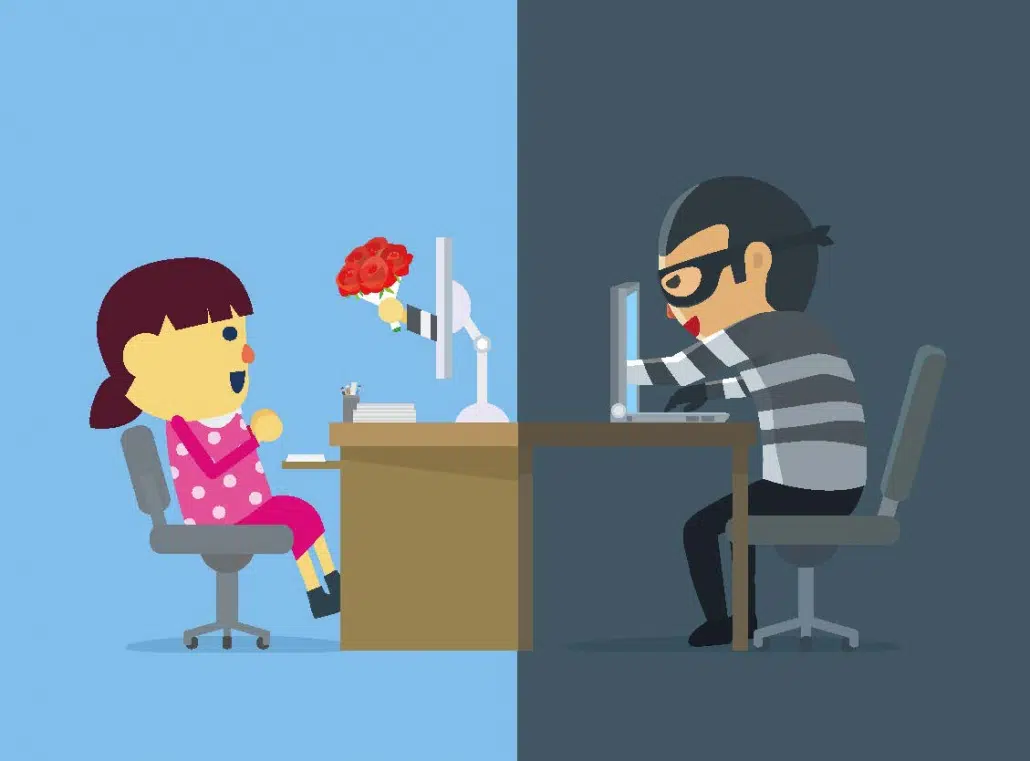
A romance scam preys on people who might feel lonely or unsuccessful at finding love. Victims of romance scams can come from every income level, educational background, gender, age, sexual identity and ethnicity. There’s no single target demographic for this crime because anyone can be tricked by a sweet talker who says exactly what they need to hear.
With the commercialism of Valentine’s Day all around us, it’s the time when scammers up their game. Many people don’t want to be alone on the most romantic day of the year. It’s why it is the time when the bait is thrown out there and the nets are cast, hoping to snare a willing victim.
With that said, romance scams strike at all times of the year. According to the Federal Trade Commission, total fraud losses reported by older adults (ages 60 and over) increased from $600 million in 2020 to $2.4 billion in 2024. The increase was largely driven by reports of losses over $100,000, often to romance scams.
Fortunately, the Identity Theft Resource Center (ITRC) saw a 32 percent decrease in romance scam cases reported to its contact center in 2025 compared to 2024. Additionally, romance scams accounted for only three (3) percent of scam cases to the ITRC in 2024-2025.
Different Types of Romance Scams
There are a few different ways that romance scams can manifest, including:
1. Money is Needed for a Family Emergency
One common approach is for a scammer to build trust with you over weeks and months, then fabricate a crisis. It could be a medical emergency, travel troubles, legal issues or something else. An example of this could be a social media message from a pleasant-looking person “intrigued” by your profile picture. You start talking and learn that this person is an offshore oil rig worker, a deep-sea fisherman or even a deployed member of the military. The job is important, as it provides the excuse to be away from a computer and phone, away from their own funds, for long periods of time. That way, it’s much more plausible when they need you to send money. Some reported excuses have included a new engine for the boat since the scammer claims to be stranded at sea and plane tickets home from another country when the scammer says his mother is in the hospital.
2. A Military or Government Employee is Stuck Overseas
Another approach is an identity criminal pretending to be with the U.S. government or in the military, claiming that they cannot get home. They often say they need funds for fake logistical hurdles. Some reported examples include arriving at the airport to find their ticket was for the wrong flight and having to pay a fee. There was also a visa requirement to enter the country. After that, it was more fees – and the game continued.
3. An Opportunity to Earn Money by Receiving and Transferring Funds
Unfortunately, identity criminals can get victims into trouble by having them receive and transfer funds in a money mule scam, a form of money laundering. The scammer gets the victim to accept a deposit into their bank account, withdraw the funds and then wire them to someone else. The victim is now complicit in stealing money from other victims and forwarding it to other bad guys. Just because they’re also a victim, that doesn’t erase their criminal role in the scam.
4. The Opportunity to Earn Money Through Investing in Cryptocurrency
Scammers trick the victims into thinking they’re investing in cryptocurrencies. They typically target victims on dating apps and other social media sites. Once the criminal gains the victim’s trust, they claim to know about cryptocurrency investment or trading opportunities that will result in substantial profits. The scammer directs the victim to a fraudulent website for an investment opportunity. Once they trick the victim into investing on the platform, they can withdraw a small amount to further gain the victim’s trust.
The FBI says that after a successful withdrawal, the scammer tells the victim to invest larger amounts of money. When the victim is ready to withdraw more funds, the scammers create reasons why it cannot happen, enticing the victim to provide additional funds. Sometimes, a customer service group gets involved, which is also part of the scam. When victims can no longer withdraw any money, scammers typically stop communicating.
The Evolution from Romance to Relationship Scams
The ITRC continues to see romance scams evolve into broader “relationship scams”, where identity criminals often focus on long-term trust-building to exploit emotional bonds. Many times, these scams are tied to investment scams. This was a prediction the ITRC made for 2023.
What You Can Do to Stay Safe
The internet is filled with authentic opportunities to meet someone special. However, it’s also a breeding ground for scammers. By using reputable dating sites, you might avoid many heartaches. The companies running the sites cannot vet every profile or message for authenticity. At the same time, social media has made it all too easy for criminals to contact victims with seemingly sincere promises, hoping they will fall for a romance scam.
Adopting a cautious approach to anyone you meet online is vital to safeguard your heart and your money. A good rule of thumb is this: if you wouldn’t fall for it in person, don’t fall for it online. If the offer seems too good to be true, it probably is. Anyone who declares undying love too early in the relationship or asks for over-the-top favors too soon should not be trusted. If the person’s background story is a little too shady or falls into the stereotype of the romance scammer, be careful. Most of all, keep your personal information and money close, and don’t be quick to share either one.
Contact the ITRC
If you believe you are the victim of a romance scam or other identity crime, contact the ITRC to speak with an expert advisor. Call or text toll-free at 888.400.5530 or live chat on the ITRC website.
The post was originally published on 2/11/18 and was updated on 2/6/26