

Key Takeaways
- AI makes fraudulent emails, websites, paid ads, and phone numbers look identical to real companies
- Criminals can mimic logos, wording, tone, and formatting with high accuracy
- Links and attachments generated by AI can appear legitimate while leading to harmful sites
- AI enables criminals to create convincing conversations that bypass common red flags
- Scams powered by AI are growing in quality, making traditional cues like typos and odd phrasing less reliable
- The ITRC can help victims of scams or identity crimes understand what happened and create a recovery plan
Recognizing a scam used to be simpler. You could often spot poor grammar, awkward phrasing, or an email design that looked off. Today, artificial intelligence has transformed the way criminals impersonate trusted brands and individuals. AI tools make scam messages cleaner, more convincing, and far more believable. The result is a new category of fraud that is significantly more difficult to detect.
If you have recently been targeted by something that felt “too real,” you are not imagining it. AI has allowed criminals to elevate their tactics. Understanding these changes is an important step in protecting yourself, your identity, and your financial information.
This article explains why AI scams are harder to detect, points to visual examples from the image you provided, and outlines what to do if you become a victim.
Why AI Makes Today’s Scams So Convincing
AI has introduced a level of polish and accuracy that criminals did not have before. They can generate text that sounds professional, mimic corporate branding, and craft messages that match a company’s real tone. Instead of broken English or strange formatting, a scam email might look identical to the real thing.
While this may be alarming, there are steps you can take to protect yourself, which we will dive into later. First, let’s look at how AI makes scams more difficult to detect.
1. AI Makes Messaging and Branding Look Real
One of the clearest examples is in the image provided. The email looks like it comes from a legitimate organization and uses:
- Clean formatting
- Professional tone
- A corporate-style greeting
- A real-world project request format
- Familiar logos and neutral color schemes
AI tools can study legitimate company messages and recreate them with almost perfect accuracy. This means images, formatting, and even sentence style can be duplicated in seconds.
Criminals no longer rely on clumsy copy and paste jobs. The emails they create look polished and familiar.
2. AI Produces Identical Wording and Visual Elements
In the image example, the email uses identical wording, layout cues, and structure that many real companies use in their proposal or RFP processes. AI can:
- Read sample emails from the real business
- Copy their style
- Generate new messages written in the same voice
This makes it tough to tell whether the message is a scam or a genuine request.
3. Fraudulent Links Look Legitimate
The image highlights a critical clue: the link is disguised as a PDF. To most recipients, it looks routine. But hovering over it reveals a completely unrelated URL.
AI tools allow criminals to generate fraudulent links that:
- Look like a document preview
- Match naming conventions from real organizations
- Use realistic file titles or numbering patterns
Criminals use this technique to get you to click without thinking. In the example, the link text looks professional and specific, but the URL is a completely unrelated domain.
4. AI Helps Criminals Create Urgency
The sense of urgency in the example email is another AI-supported tactic. Notice how the deadlines are tight and the instructions appear procedural. AI models can mimic common industry language such as:
- “Reply within two business days”
- “Submit full proposal by [date]”
- “Confirm intent to bid”
These familiar phrases make the email feel legitimate. AI learns these structures from business templates and applies them in new messages.
5. AI Enables Criminals to Circumvent Red Flag Call-Outs
Professionals often warn people to look for:
- Typos
- Awkward grammar
- Misaligned design
- Strange phrasing
- Unfamiliar tone
AI removes many of these traditional warning signs. Criminals can generate content that is polished and error-free. They can also use AI to revise any mistakes that might have tipped someone off.
This allows them to bypass advice commonly given to consumers, which makes the scam harder to recognize.
6. AI Lets Criminals Replicate Entire Websites and Ads
AI can scrape real websites and then help criminals build nearly identical copies. This includes:
- Company colors
- Logos
- Authorized partner badges
- Navigation menus
- Customer service scripts
Combined with AI-generated text, fake websites are now almost indistinguishable from real ones. Criminals can also run paid ads that show fake phone numbers or links, making the scam look even more credible.
7. AI Supports Phone-Based Impersonation
AI-generated voices can be trained to:
- Match tone and cadence
- Use realistic pauses
- Replicate accents
- Sound confident and authoritative
A criminal may impersonate a bank representative, a company’s fraud department, or even someone you know.
AI voice generation makes these calls much harder to identify as fraudulent.
Examples of AI-Driven Scams That Are Harder to Detect
AI enhances several types of scams. Here are some common ones consumers should watch for.
1. Email Impersonation Scams
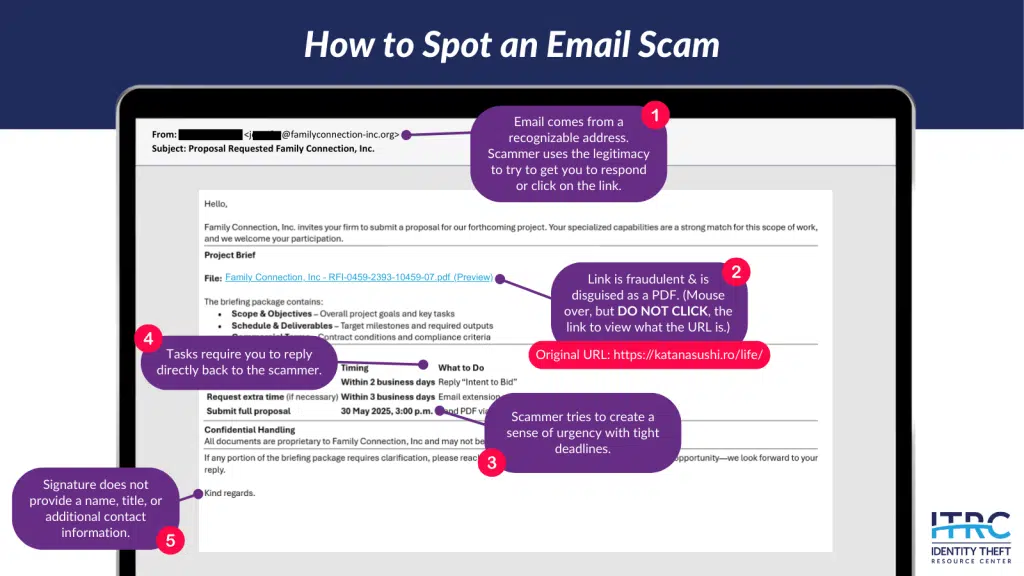
The image provided is a prime example. Criminals use AI to generate messages that:
- Appear to come from legitimate companies
- Use identical branding
- Include credible requests
- Contain fraudulent links disguised as files or documents
These scams are often used to steal login credentials or install malware.
2. Paid Ad and Fake Website Scams
AI allows criminals to:
- Create legitimate-looking sites within minutes
- Generate text that mirrors real marketing copy
- Use real company phone numbers and then spoof them
- Buy ads that appear at the top of search results
- Hide malware in fake websites to avoid anti-virus/anti-malware tools
Victims believe they are visiting a real company website when the entire page was built by AI.
3. Invoice or Payment Request Scams
AI-generated invoices often include:
- Real logos
- Correct formatting
- Fake account numbers
- Genuine-sounding charges
These invoices may arrive by email, text message, or through an impersonated online account.
4. Customer Service Impersonation Scams
Criminals can build AI chatbots that resemble legitimate customer service agents. They can:
- Imitate writing styles
- Use real support phrases
- Respond quickly and logically
Victims may think they are receiving legitimate assistance.
How to Protect Yourself from AI-Driven Scams
AI scams are more convincing, but there are still ways to stay safe.
1. Inspect the sender address and URLs
Hover over links. Even if they look like PDFs or company documents, the underlying URL may lead somewhere unusual.
2. Never click links you were not expecting
If an email arrives with a file you did not request, do not open it. Verify first.
3. Look for inconsistencies in tone or requests
Even the most sophisticated AI content can still include:
- Slightly unusual phrasing
- Subtle inconsistencies
- Requests that feel out of context
If something feels off, pause before responding. Do not click on links or attachments unless you requested them from a known, legitimate company.
4. Verify the request through a known channel
If you receive an unexpected message that seems legitimate:
- Call the organization using a phone number from its official website
- Contact the person through a known address or number
- Avoid replying directly to the suspicious email
Even one extra verification step can prevent a scam.
5. Report suspicious messages
Reporting helps stop similar scams from spreading. You can alert:
- Your IT team
- Your email provider
- The organization being impersonated
You can also share a screenshot with the ITRC if you are unsure whether something is real.
What to Do if You Become a Victim of an AI Scam
If you discover that you clicked a fraudulent link, sent money, or shared personal information, take action right away.
- Change passwords for all affected accounts.
- Enable multifactor authentication and Passkeys wherever possible
- Monitor your financial accounts and credit
- Review connected devices in your online accounts and remove unfamiliar ones
- Contact your bank or service provider if financial information was shared
- Report the incident to the ITRC for personalized guidance
The ITRC offers free, expert assistance to help victims understand next steps and reduce their risk of further harm.
Final Thoughts
AI has transformed the world of online fraud. Scams are cleaner, more accurate, and far more believable than they used to be. Criminals can now mimic real companies, impersonate trusted individuals, and produce flawless messages that hide fraudulent intentions. The clues are not always obvious, which is why awareness and verification are essential.
If you ever find yourself unsure about a suspicious message, or if you believe you have already interacted with an AI-driven scam, the Identity Theft Resource Center is here to help. Our advisors can walk you through what happened and create a personalized recovery plan so that you feel informed and supported.
Staying vigilant is the first step. Getting help when you need it is the next.